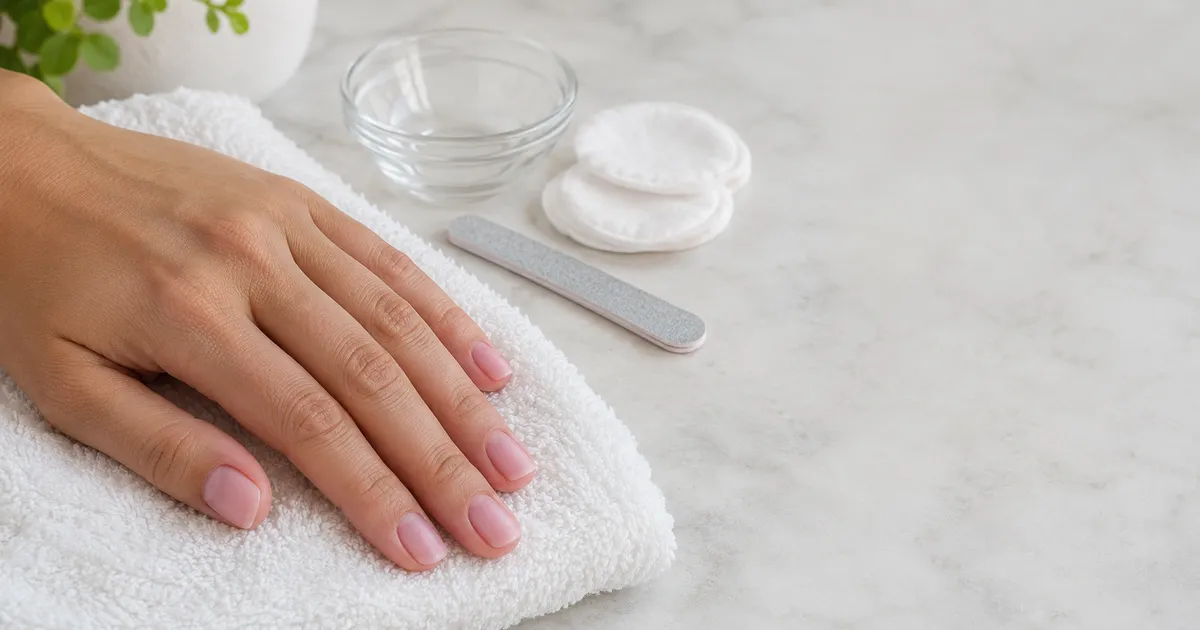
TL;DR. To remove acrylic nails at home, clip them short, file off the top coat and as much acrylic as you safely can, then soak in pure acetone. Use a glass bowl, foil wraps, or a small bowl of acetone set inside a bowl of warm water. Never heat acetone directly. Every 10 to 15 minutes, gently push off the softened acrylic. Plan on 45 to 90 minutes in total. Never pry, peel or bite acrylics off, and oil your nails well for a few days afterward.
Why you should never pry, peel or bite acrylics off
Acrylic bonds tightly to the top of your natural nail. When you pry up an edge or bite it off, the acrylic does not let go. Instead, the top layers of your nail come away with it. That leaves the nail thin, bendy and sore, and it can take months to grow out.
Acetone softens acrylic so it can be pushed away gently. It is slower, but it protects the nail underneath. If one acrylic has already lifted and is catching, trim the loose part with clean clippers and file the edge smooth. Do not pull it.
What you need
- Pure acetone. Look for 100 percent acetone. Regular remover is often too weak to soften acrylic.
- Nail clippers. For cutting the extensions down to size.
- A coarse file and a fine buffer. Around 100 to 180 grit for the bulk, and 240 grit or finer for the last traces.
- A glass or ceramic bowl, or foil and cotton. Acetone can soften some plastic bowls.
- An orangewood stick or cuticle pusher. For easing off softened acrylic.
- Petroleum jelly, cuticle oil and hand cream. Acetone is very drying.
- A towel and a ventilated room. Open a window and keep acetone away from flames and heat.
How to remove acrylic nails step by step
- Clip the length. Cut each acrylic as close to your natural free edge as you can. Less acrylic means a shorter soak.
- File the top first. File off the shiny top coat and any gel color, then file away as much acrylic as you comfortably can. Stop well before you reach your natural nail. A thinner layer softens much faster.
- Protect your skin. Rub petroleum jelly or a thick oil on the skin around each nail, but keep it off the acrylic.
- Soak in acetone. Use one of the methods below. Soak for 15 to 20 minutes to start.
- Push off what has softened. The acrylic should look gummy or crumbly. Hold the pusher at a low angle and push gently from the cuticle toward the tip. Only remove what comes away easily.
- Repeat. Soak again for 10 to 15 minutes and push off the next layer. Most sets need two to four rounds.
- Buff the last traces. Use the fine buffer with light strokes. If you have to press hard, soak again instead.
- Wash and oil. Wash off the acetone with soap and water, then apply cuticle oil and hand cream.
In total, plan on 45 to 90 minutes, depending on how thick your acrylics are and how much you filed first. Filing the bulk off well is the best way to save time.
Three ways to soak acrylics in acetone
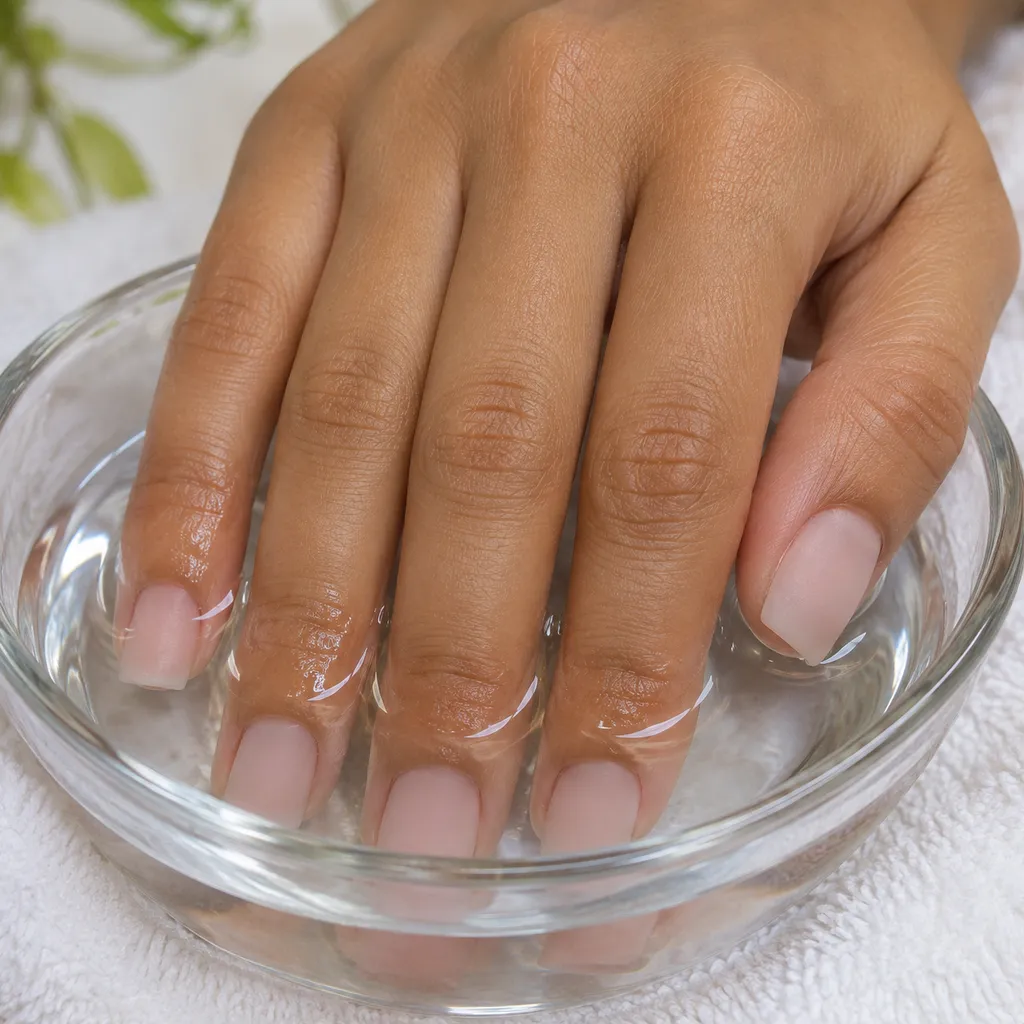
- Bowl soak. Pour acetone into a small glass or ceramic bowl and rest your fingertips in it. It is the simplest method and easy to check, but it dries out the skin around every nail.
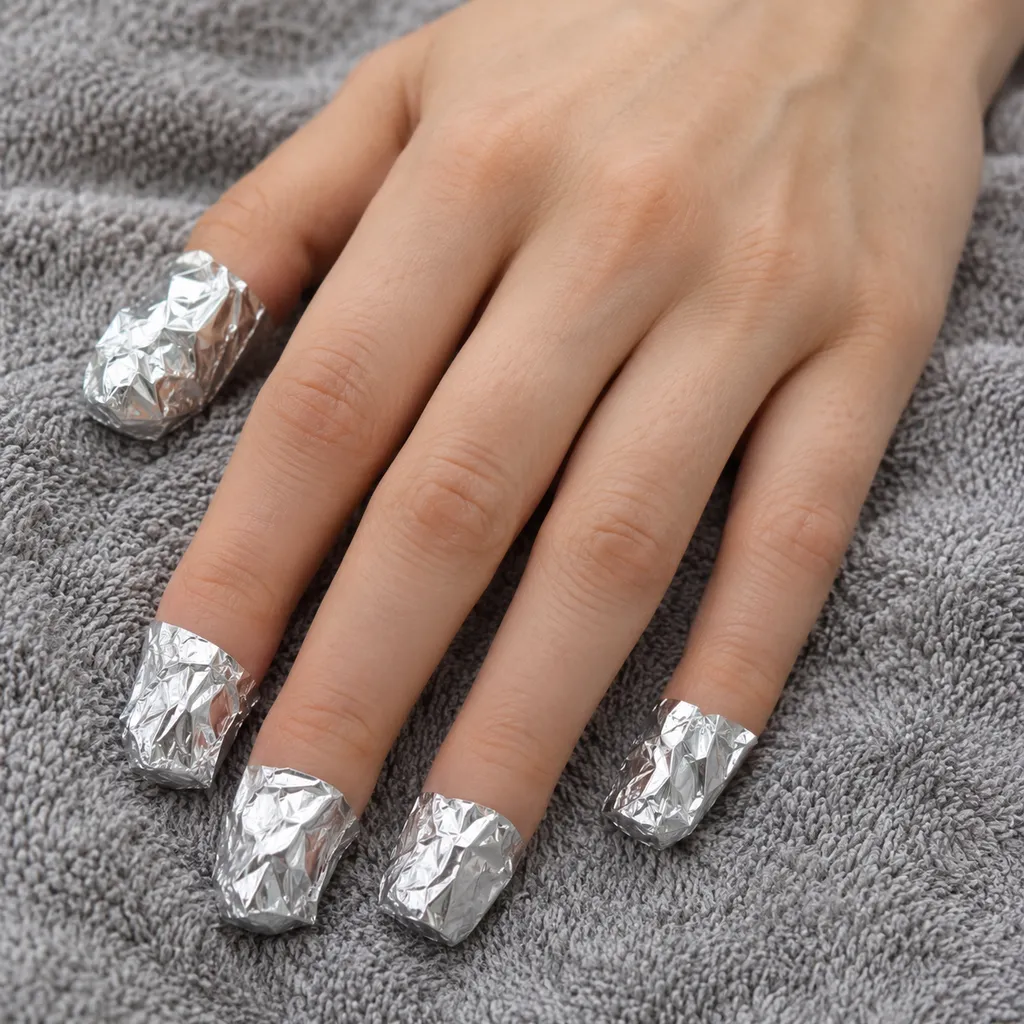
- Foil wraps. Soak a piece of cotton in acetone, press it onto the nail and wrap the fingertip snugly in a square of foil. It keeps acetone on the nail and off most of the skin.
- Warm-water double bowl. Set a small bowl of acetone inside a larger bowl of warm tap water. The gentle warmth helps the acetone work a little faster.
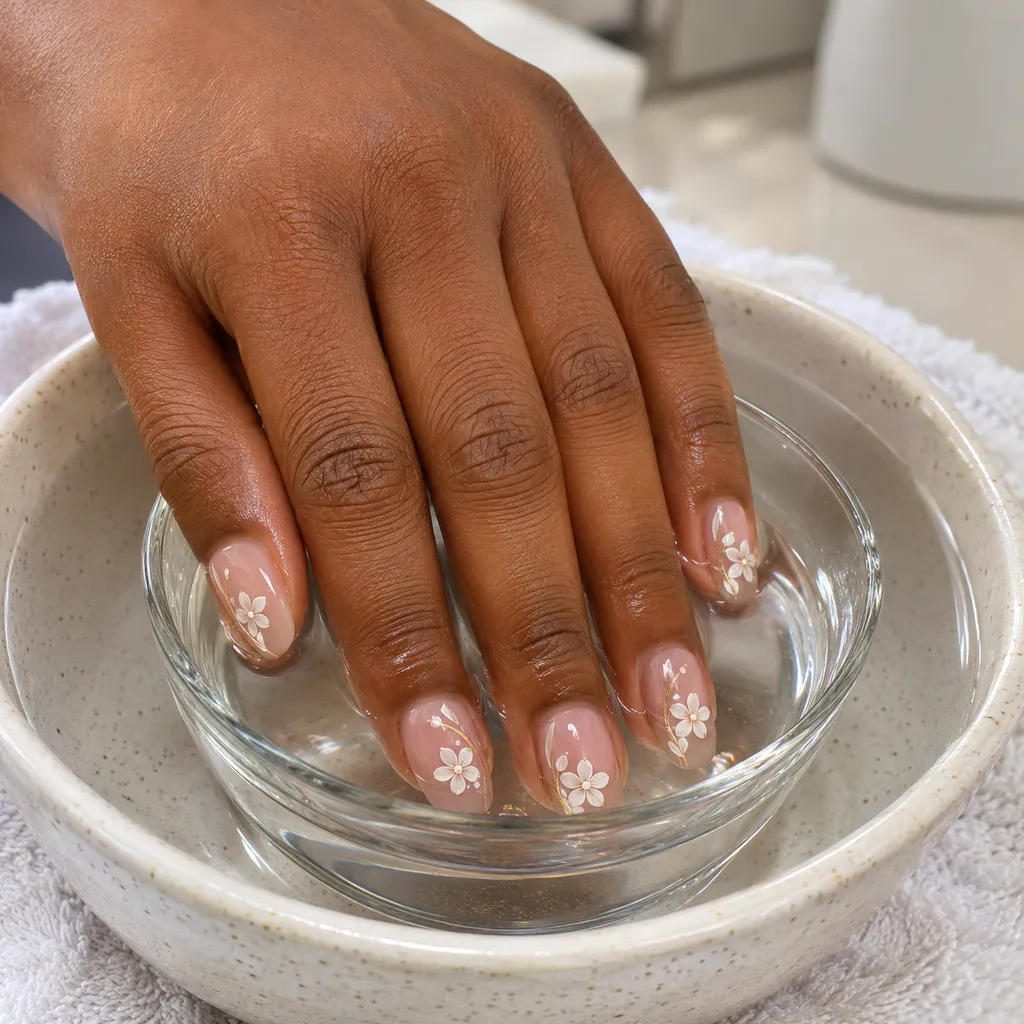
Never heat acetone directly. Do not put it in a microwave, on a stove or near a hair dryer, candle or cigarette. Acetone is highly flammable, and its vapor can catch fire. Warm water from the tap is enough. Change the water if it cools, and keep the acetone bowl away from your face.
What not to do
- Do not pry or peel. Lifting acrylic with clippers, tweezers or another nail tears off nail layers.
- Do not bite or chew. It tears the nail and puts small pieces of acrylic in your mouth.
- Do not file into your natural nail. If you see a change in color or feel heat or stinging, stop filing.
- Do not scrape hard. Force means the acrylic is not soft enough yet. Soak longer.
- Do not use an e-file at home unless you are trained. It removes product fast and can thin or burn the nail in seconds.
- Do not use dental floss tricks. Sliding floss under an acrylic to pop it off is prying with a different tool.
Aftercare for your bare nails
Right after removal, nails often look white and chalky and feel dry. This is mostly dehydration from the acetone. It usually improves within a day or two with moisture.
- Oil often. Use cuticle oil three or four times a day for the first few days, and hand cream after each wash.
- Keep nails short. Freshly bare nails are weaker. A short, rounded shape is less likely to split.
- Wear gloves. Protect your nails from hot water and cleaning products while they recover.
- Be gentle with cuticles. Push them back softly after a shower, but do not cut living skin. Our cuticle care guide explains how.
- Take a break if you can. A few days to a few weeks without product lets you see the true condition of your nails.
If your nails are thin, bendy or peeling, read our guide to repairing damaged nails. Pain, swelling, redness or a nail lifting away from the skin is a reason to see a doctor or dermatologist.
When to go to a salon instead
A salon removal is the better choice in these cases:
- Very thick or long sets. They take a long time to file and soak at home.
- Signs of infection. Green or dark patches, pain or swelling under an acrylic need a doctor first, not a soak.
- A nail that is already damaged or lifting badly. A technician can remove the product with less stress on the nail.
- Sensitive or broken skin. Acetone can sting cuts and irritate eczema.
- You are short on time. A technician can file most of the acrylic quickly with an e-file, so the soak is short.
Removal on its own is usually a short, low-cost service. Not sure how long your set should last before removal? See how long acrylic nails last.
Removing press-ons, dip powder, gel and polygel
Other nail products come off in slightly different ways:
- Press-on nails. Soak your fingertips in warm, soapy water with a little oil, then gently rock the nail loose. Glued press-ons may need an acetone soak. See how to apply press-on nails for the full routine.
- Dip powder. File off the shiny top layer, then soak in acetone like acrylic. It usually softens faster. Our dip powder vs gel post compares the two.
- Gel polish. File off the shine and use the foil method. Our guide on how to remove gel polish covers each step.
- Polygel. Mostly filed down rather than soaked. See our polygel nails guide.
Check your nails before the next set
A day or two after removal, once the chalkiness fades, is a good time to look closely at your bare nails. CutieCure includes an AI nail analysis that reads a photo of your nails and gives a health score from 0 to 100. It flags visible signs such as peeling, brittleness, dryness or ridges and builds a daily and weekly care plan. It is not a diagnosis, and it cannot measure nail thickness.
When you are ready for new nails, design your own nails in the app and see the look on a photo of your own hand before you book.
Frequently asked questions
How long does it take to remove acrylic nails at home?
Usually 45 to 90 minutes. Clipping the length and filing off most of the acrylic before you soak makes it much faster.
Can you remove acrylic nails without acetone?
Not easily. Acrylic is designed to dissolve in acetone. Hot water and oil only loosen the edges, which tempts you to pry. Filing it all off without acetone is slow and easy to overdo, so a salon is safer.
Can I use regular nail polish remover on acrylic?
It usually works very slowly or not at all. Many removers are diluted or acetone-free. Pure acetone is what softens acrylic.
Is it safe to warm acetone?
Never heat acetone directly, because it is highly flammable. If you want warmth, set a small bowl of acetone inside a larger bowl of warm tap water, away from any flame or heat source.
Why are my nails white after removing acrylics?
Acetone dries out the nail surface and leaves it white and chalky. It usually fades within a day or two with cuticle oil and hand cream. Patches that stay rough may be places where nail layers came off.
Check your nails after removal
Free to download. Photograph your bare nails in CutieCure for a 0 to 100 health score and a care plan, then preview your next design on your own hand.
Download CutieCure Google PlayRelated guides
Related free tools
- Nail growth calculator: Fingernails grow about 3 to 3.5 mm a month. See how many weeks it takes to reach short, medium or long nails.
- Gel and acrylic fill schedule: Shows when your next gel polish, builder gel (BIAB) or acrylic appointment is due, usually every 2 to 4 weeks.