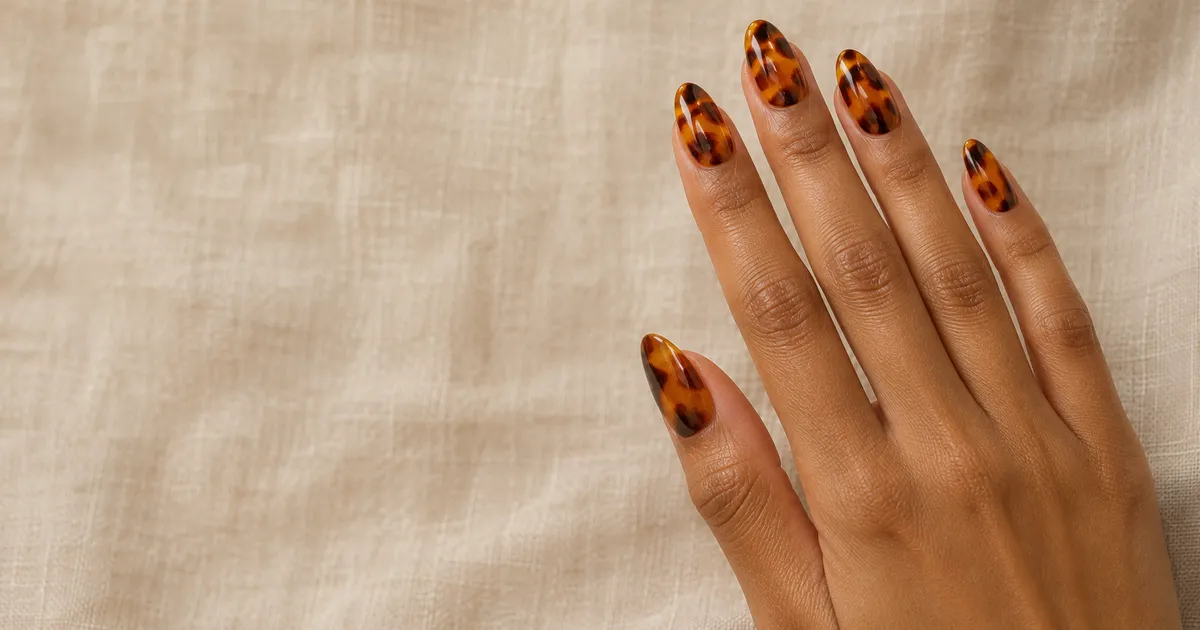
TL;DR. Tortoiseshell nails copy the warm, mottled look of tortoiseshell glasses and hair clips: patches of amber, honey and dark brown seen through glossy color. The secret is sheer, jelly-like layers. Paint an amber base, add uneven brown patches, cover them with another sheer amber layer, then add smaller dark spots. That builds depth. Regular polish works at home if each layer dries first. Tortoiseshell is a fall and winter favorite, but lighter versions work all year.
What are tortoiseshell nails?
Tortoiseshell nails, often shortened to tortoise nails, imitate the pattern of classic tortoiseshell accessories, such as glasses frames and hair clips. Today those accessories are usually made of plastic. The look is a warm mix of amber, caramel and deep brown patches that seem to float at different depths.
That depth is what makes the pattern look real. Flat brown spots on an opaque base look like leopard print. Real tortoiseshell is sheer, so some patches look close to the surface and others look buried deep inside.
How the tortoiseshell pattern is built
Every tortoiseshell manicure, at home or in a salon, follows the same layering idea.
- A sheer warm base. A translucent amber, honey or golden brown. A jelly polish or a sheer gel works best. An opaque nude underneath is optional and makes the result brighter.
- Medium brown patches. Uneven blobs of a sheer or medium brown, placed at random, often in loose diagonal groups.
- A second sheer layer. Another coat of amber jelly over the patches. This pushes them back and softens their edges.
- Dark accents. Smaller spots of dark brown or black inside or next to some of the patches.
- A final glossy layer. One more thin sheer coat, then a glossy top coat. The more sheer layers, the deeper the pattern looks.
No sheer amber polish? Mix one drop of brown or orange polish into a little clear top coat on a piece of foil to make your own jelly. Our jelly nails guide explains sheer colors in more detail.
How to do tortoiseshell nails at home
You need a base coat, a sheer amber or honey polish, a medium brown, a dark brown or black, a glossy top coat, a small detail brush or the corner of a makeup sponge, and remover with a small cleanup brush.
- Prep. File, push back your cuticles and wipe each nail with remover. Apply a base coat.
- Paint the base. Apply one or two thin coats of amber jelly. For a brighter result, paint a nude or light caramel coat first. Let it dry until it is only slightly tacky.
- Add brown patches. With the brush or sponge corner, dab three to five uneven blobs of medium brown. Vary the size and keep the shapes irregular. Leave space between them.
- Cover with jelly. Once the patches are touch-dry, paint a thin coat of amber jelly over the whole nail.
- Add dark spots. Place small dots or dashes of dark brown or black inside or along the edge of some patches. Use less than you think.
- Soften. Add one more thin coat of amber jelly or clear polish to blur the dark spots slightly.
- Seal. Finish with a glossy top coat and cap the free edge.
With regular polish, let each layer dry for a few minutes so the colors do not drag. Our free nail polish drying time calculator estimates how long to wait. With gel, many technicians place the brown spots on an uncured sheer layer so they spread and blur a little, then cure. Keep uncured gel off your skin, cure each layer fully, and stop and see a doctor if your skin becomes itchy, red or swollen.
10 tortoiseshell nail ideas
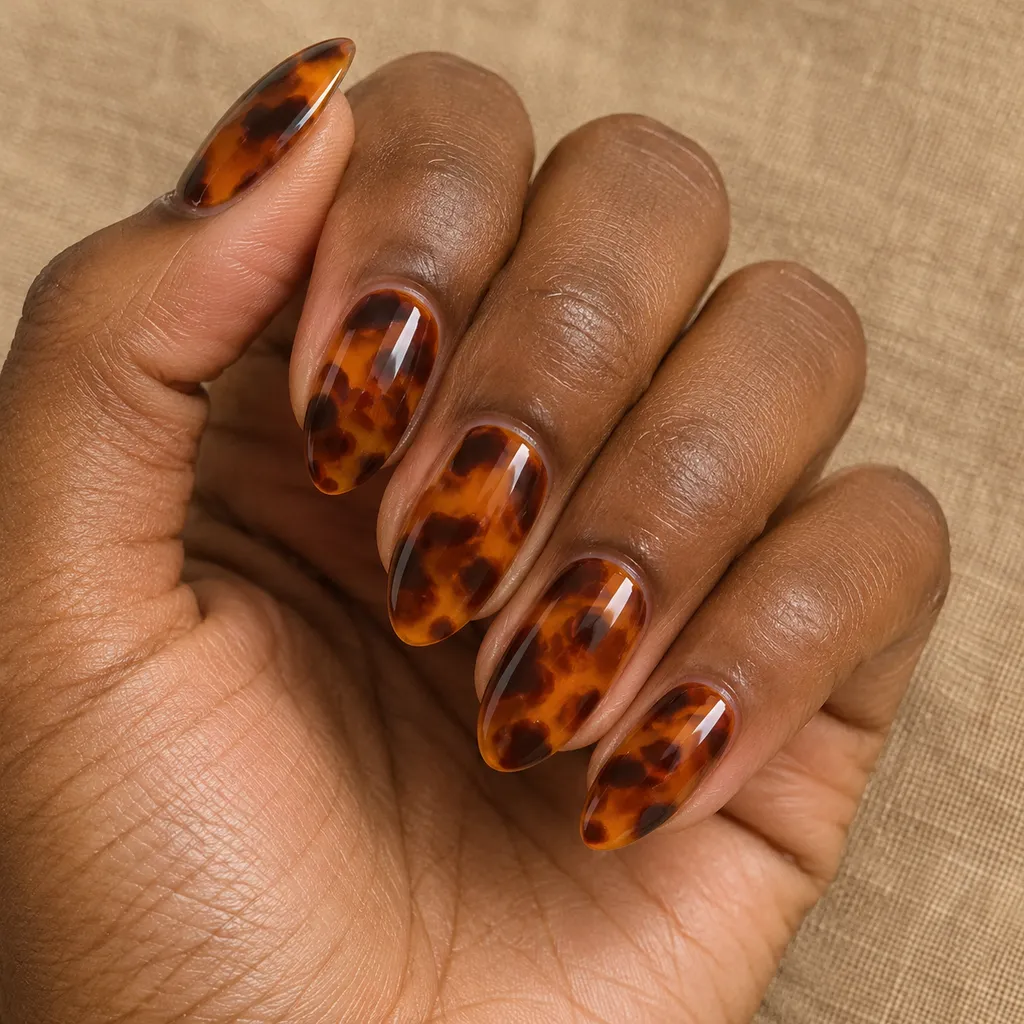
- Classic tortoise. Full tortoiseshell on every nail in amber, caramel and dark brown. Glossy and warm.
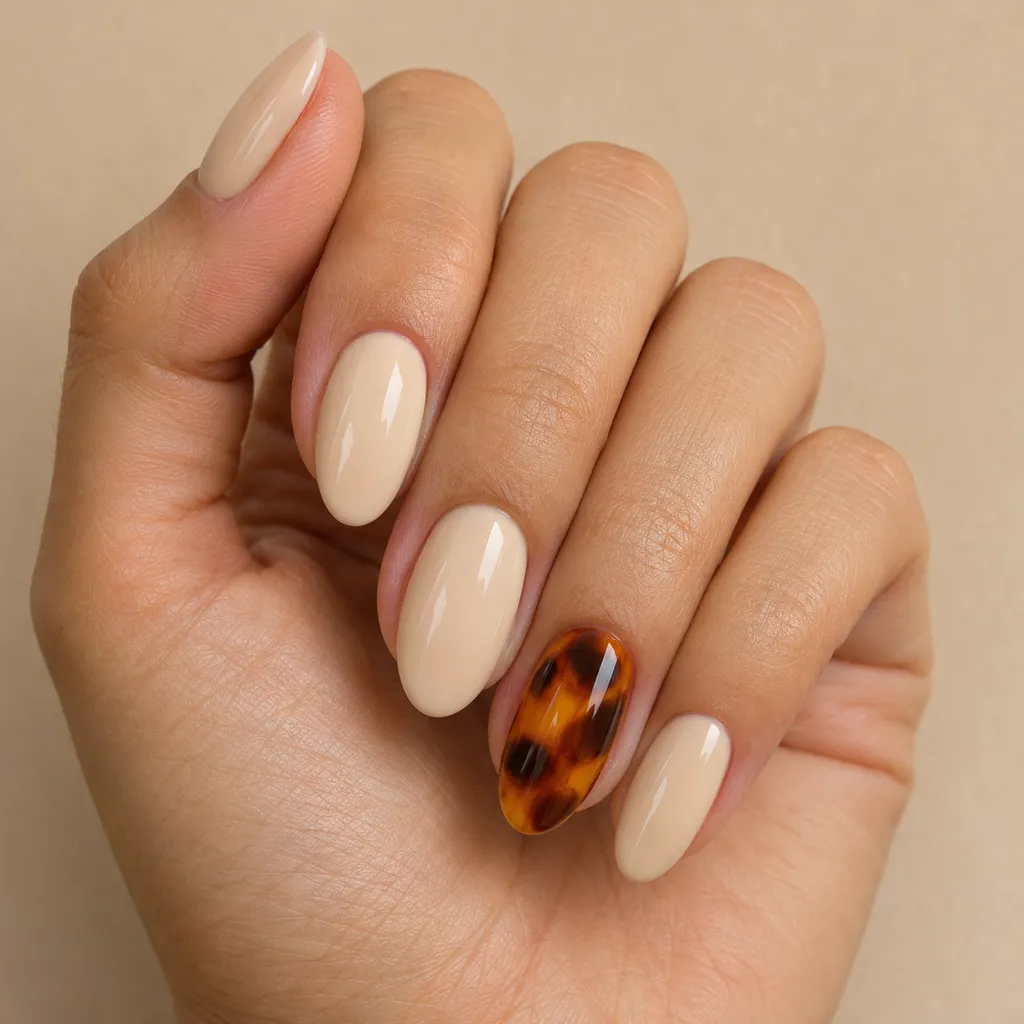
- Tortoise accent nail. Tortoiseshell on the ring finger only, with a creamy nude or chocolate brown on the other nails.
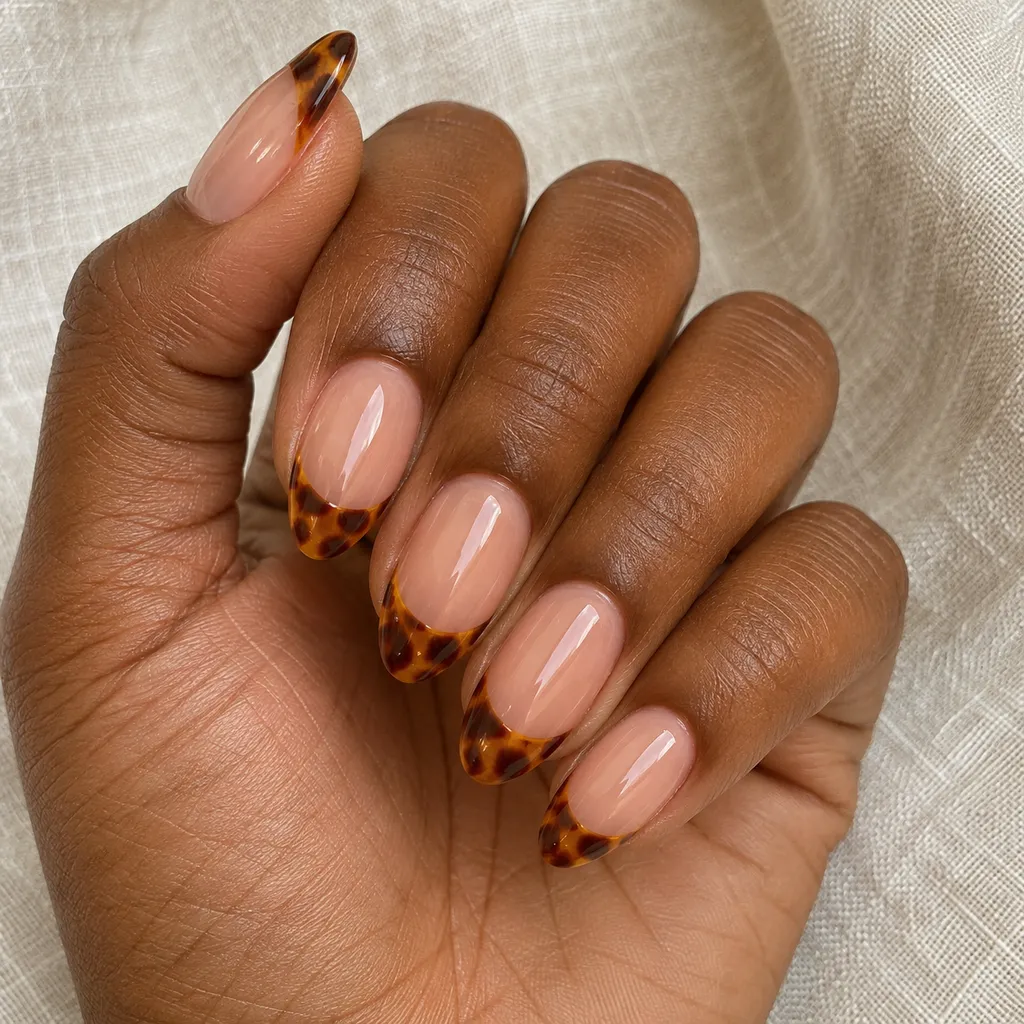
- Tortoise French. A sheer nude base with tortoiseshell only on the tips, in a classic curve or a deep V. Our French tip variations show more tip styles.
- Blonde tortoise. A light version with honey, pale gold and soft caramel patches and very few dark spots. It works well in spring and summer.
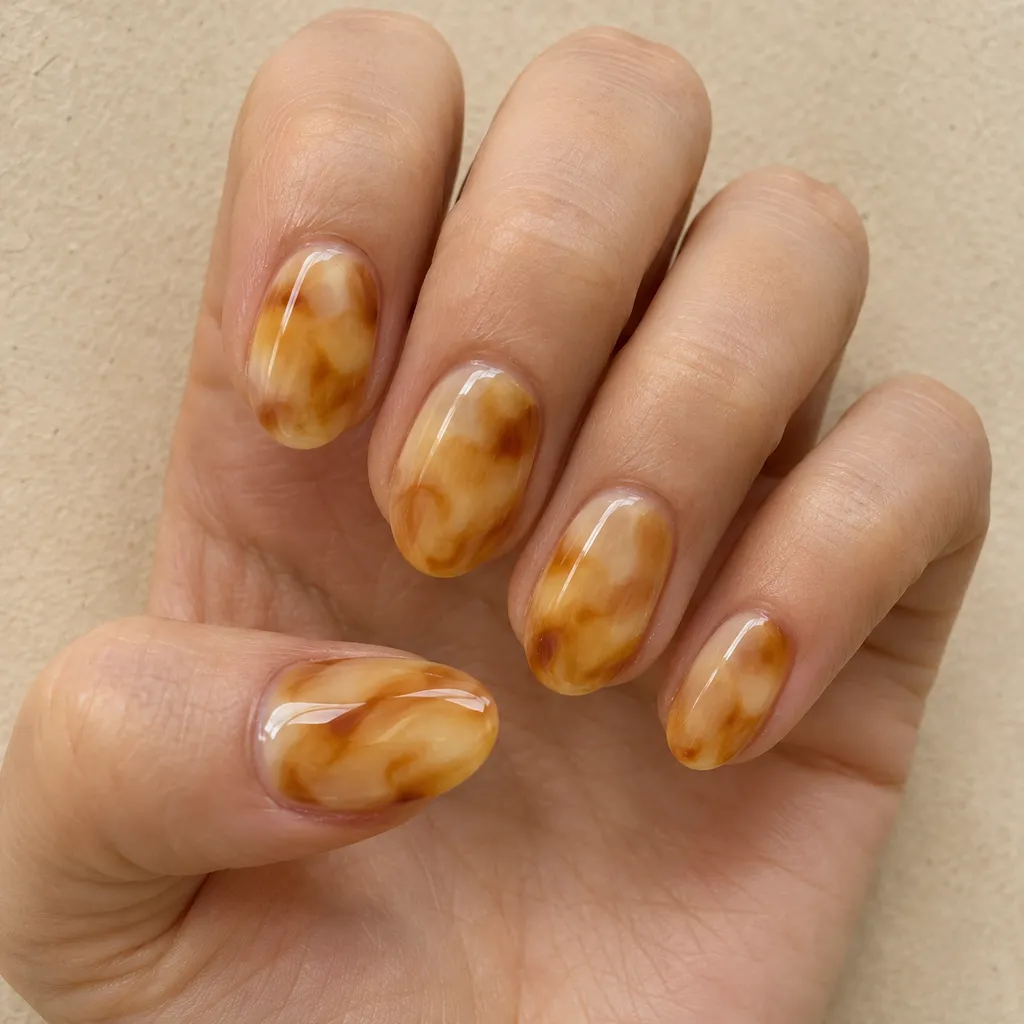
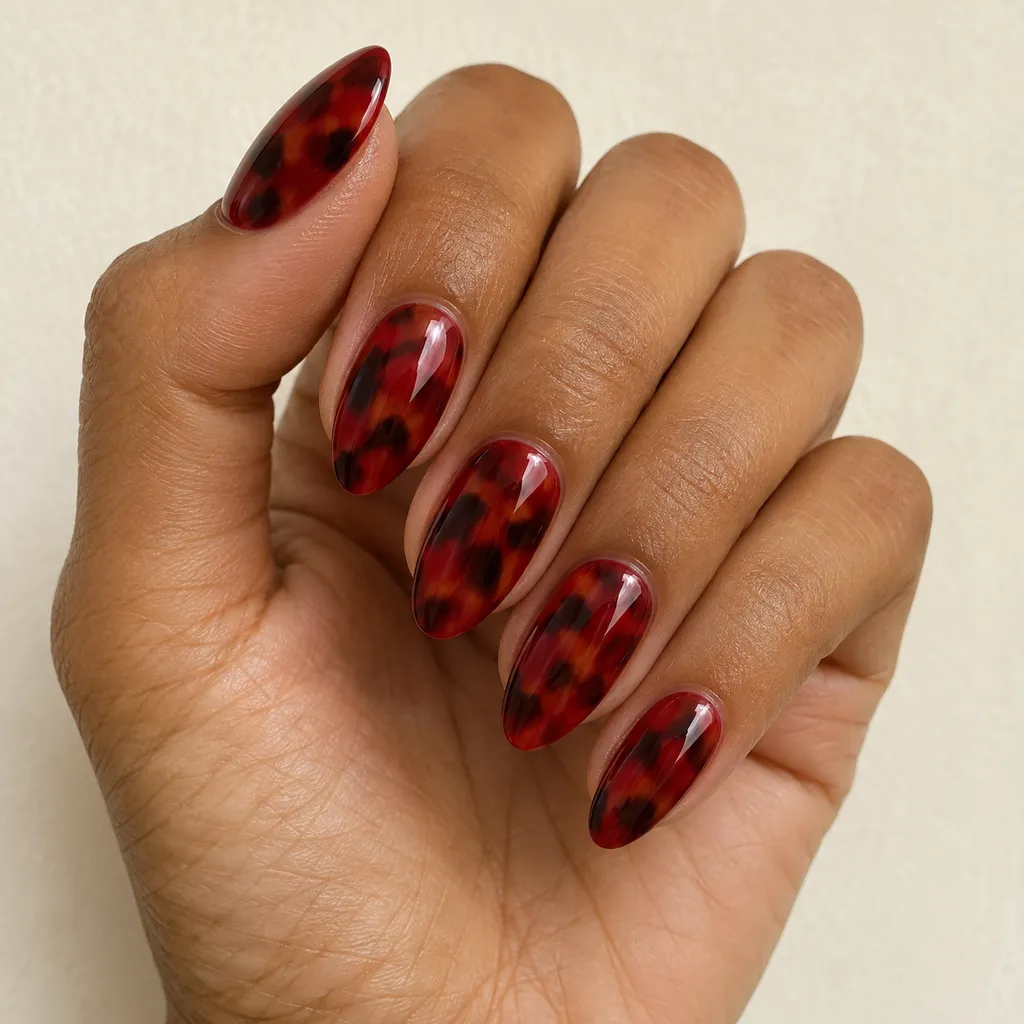
- Red tortoise. A cherry or wine jelly base with dark brown and black spots, like a deep red glasses frame. It pairs well with burgundy nails.
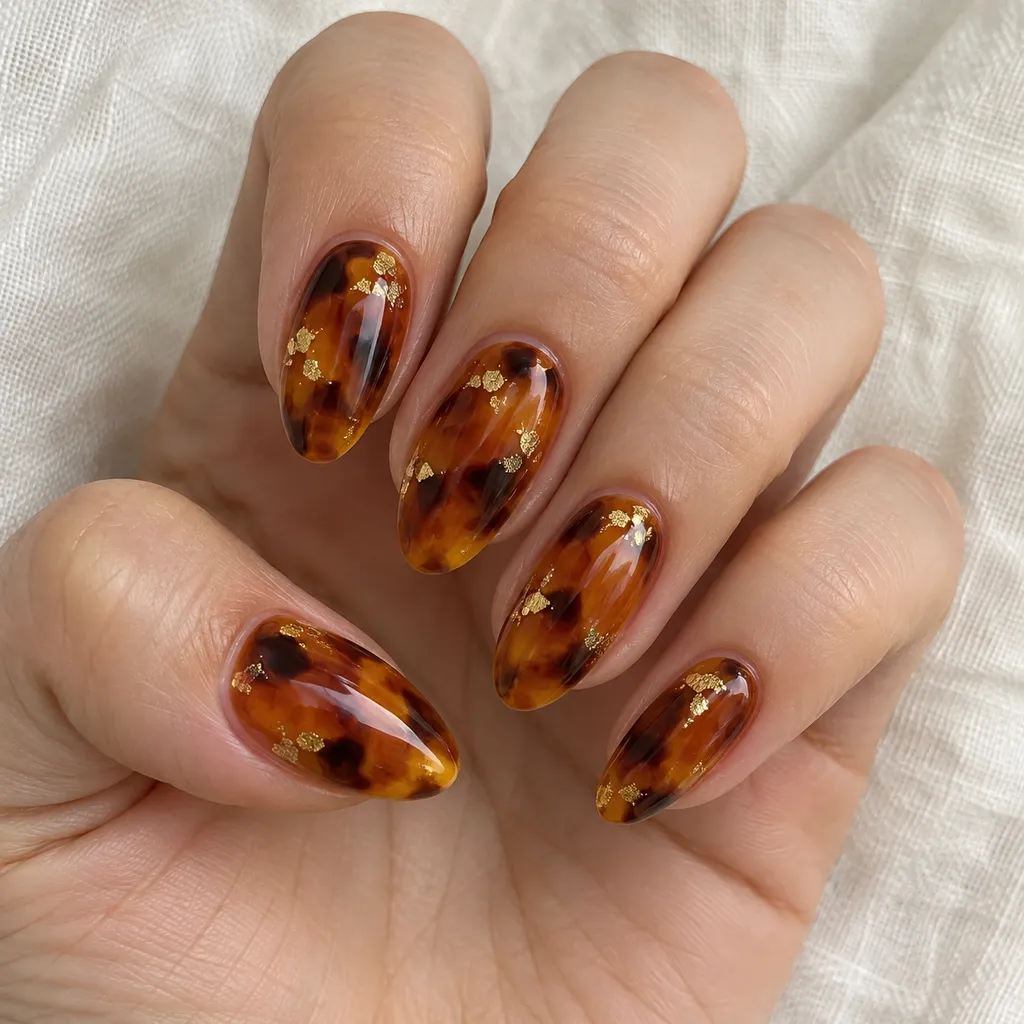
- Tortoise with gold foil. Small flakes of gold foil pressed between the sheer layers, so they catch the light inside the pattern.
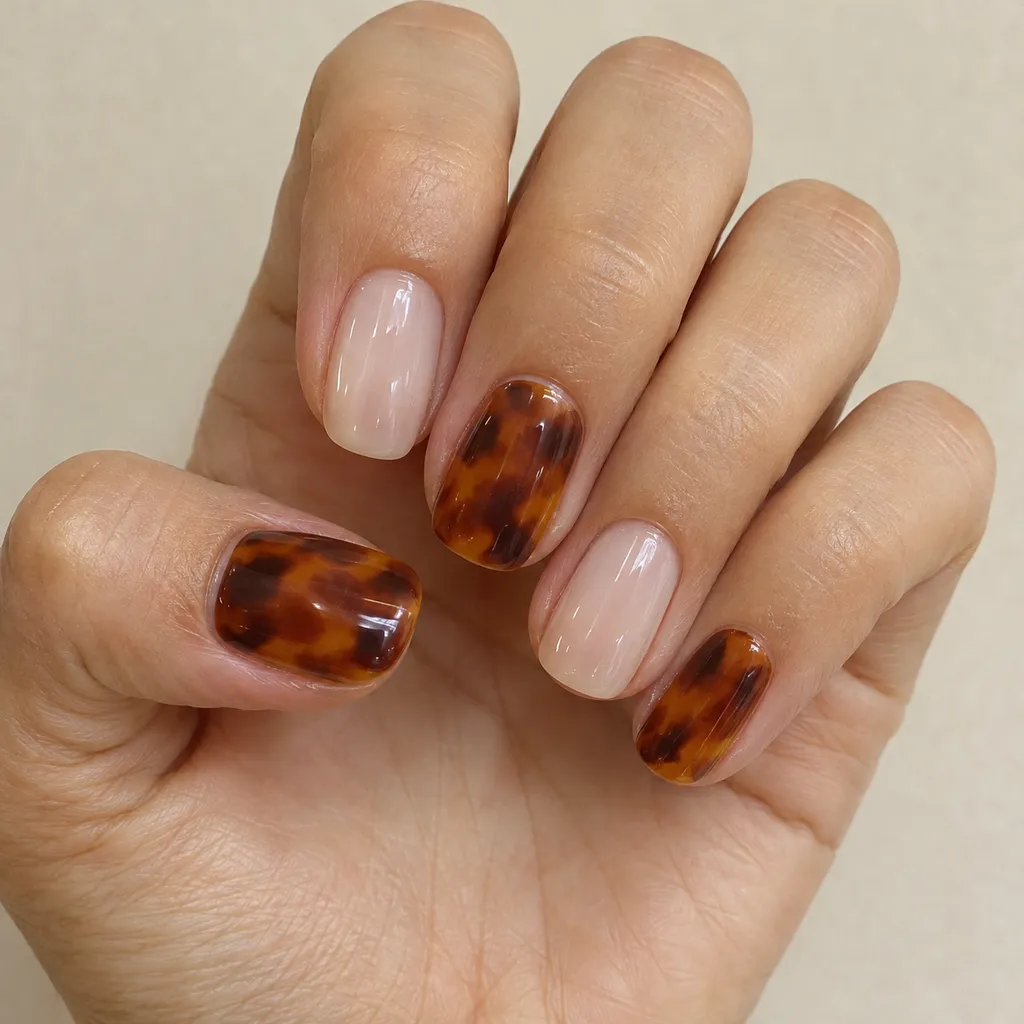
- Tortoise and nude. Every other nail in tortoiseshell, the rest in a sheer milky nude. Simple and office-friendly.
- Tortoise half moon. A small half moon at the cuticle in gold or cream, with tortoiseshell on the rest of the nail.
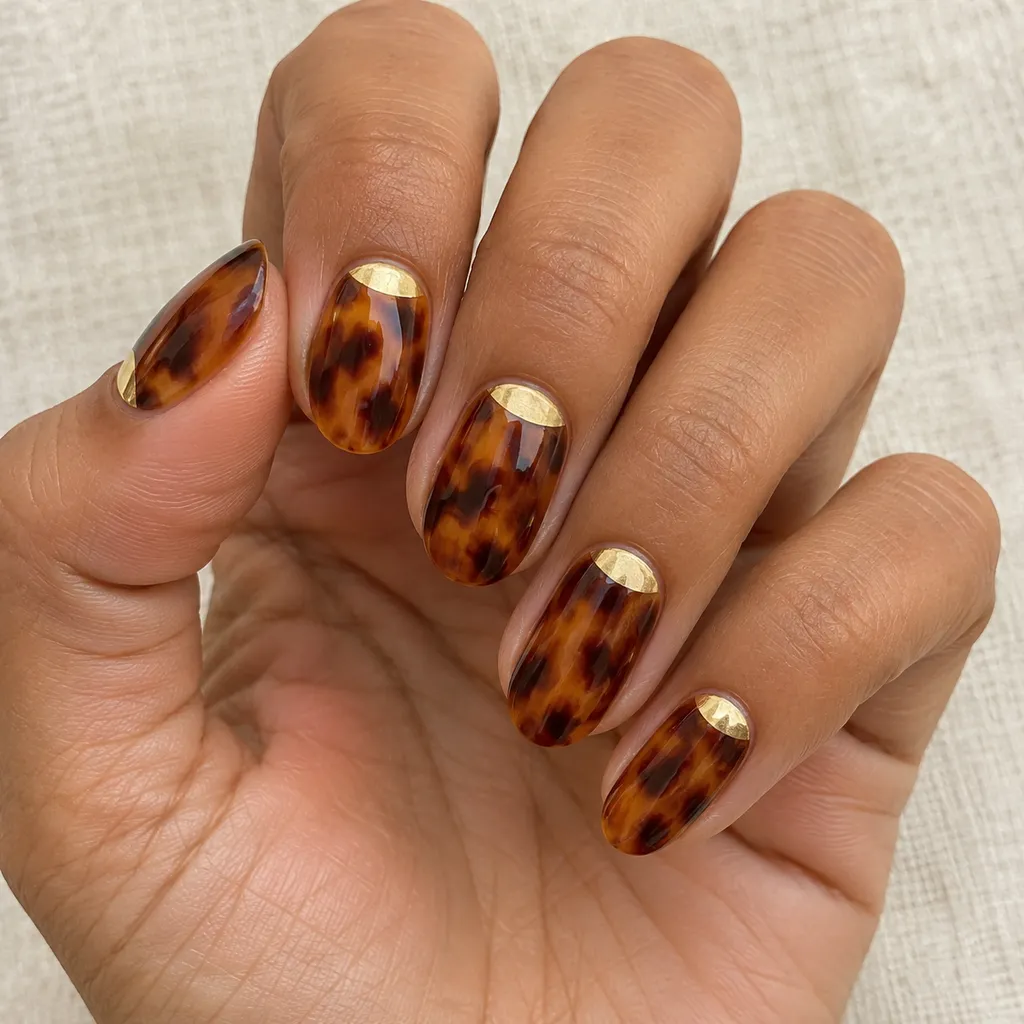
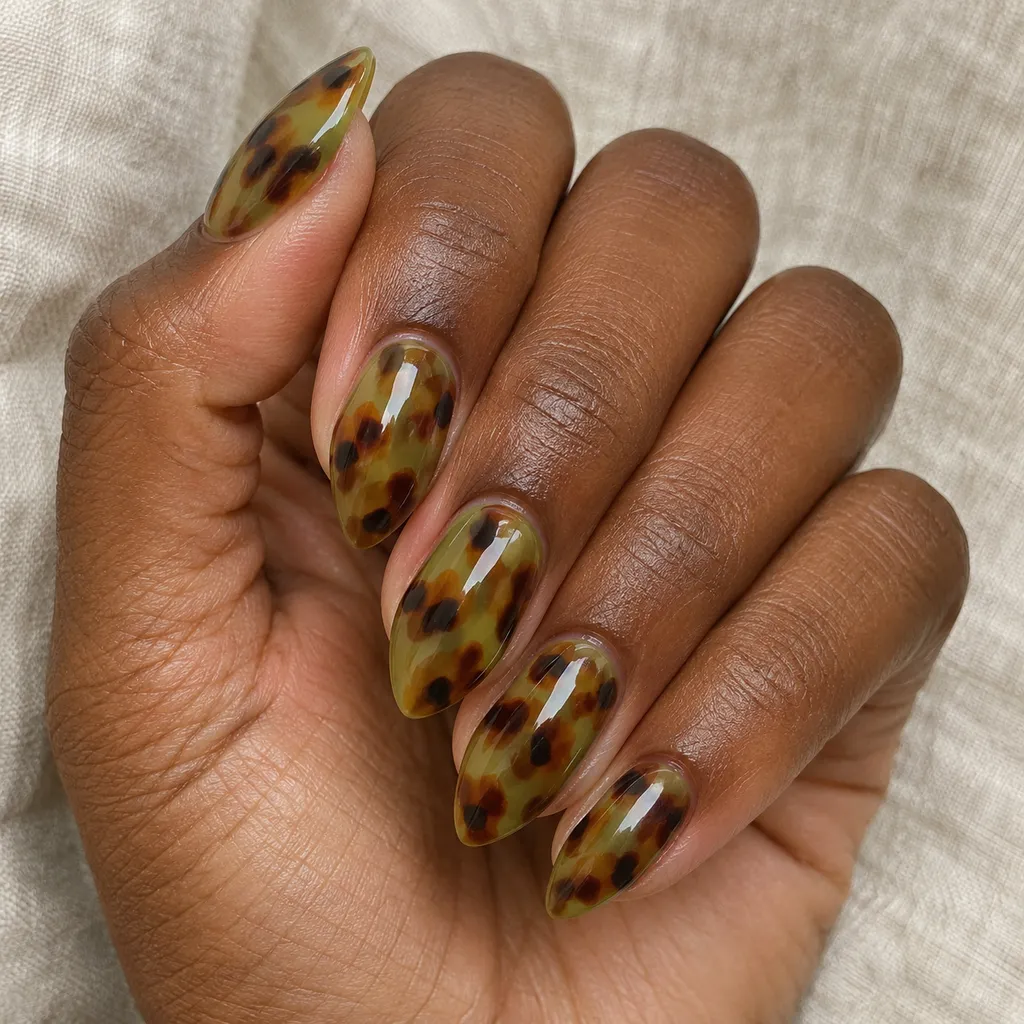
- Green tortoise. An olive or bottle green jelly with brown and black spots. Unusual and good for fall.
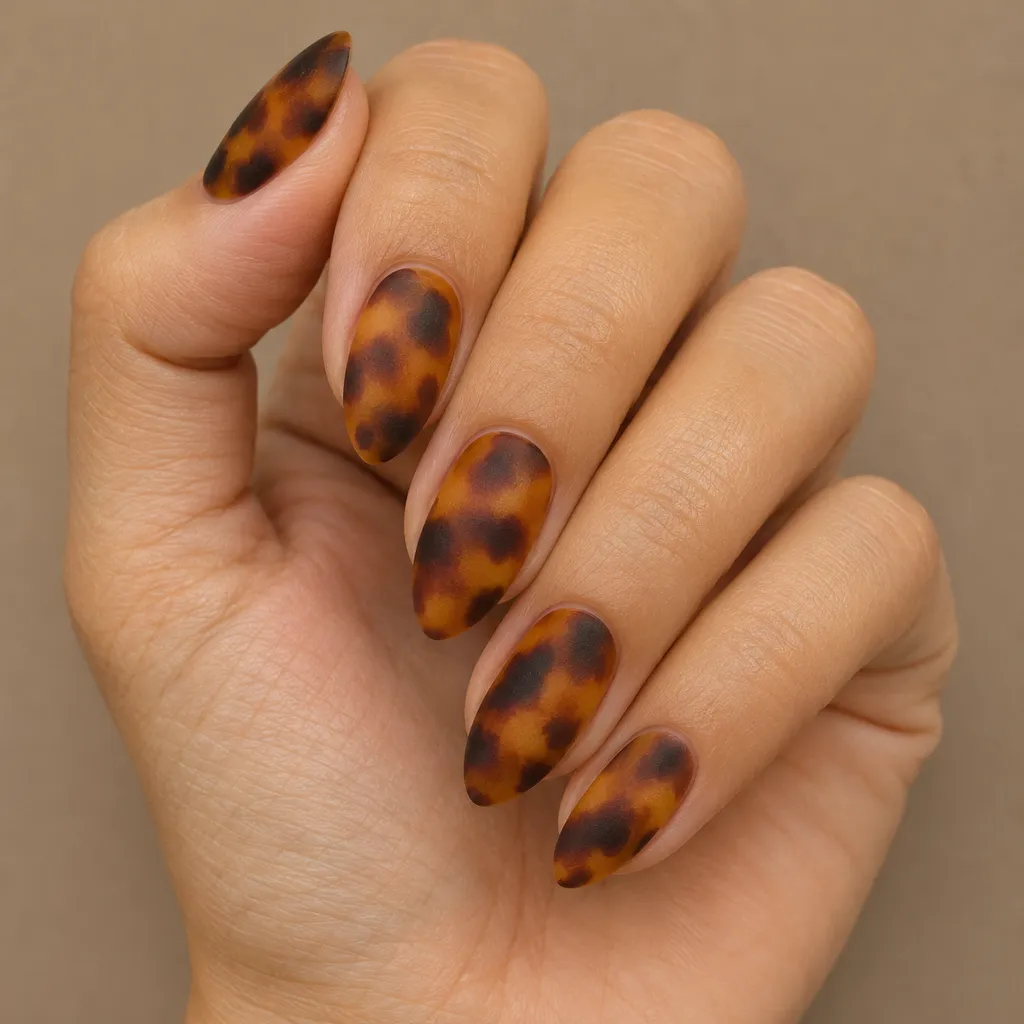
- Matte tortoise. The classic pattern under a matte top coat. It looks softer, like a matte glasses frame.
When to wear tortoiseshell nails
Classic tortoiseshell is a fall and winter favorite. The warm browns sit well with knitwear, camel coats and darker seasonal colors. For more ideas, see our fall nail art trends.
Blonde and amber versions work in spring and summer, especially with a tan or gold jewelry. Red tortoise suits the holidays. Because the colors are neutral, tortoiseshell also works for the office: try it on one accent nail with a creamy nude on the rest.
Best shapes and lengths for tortoiseshell
Tortoiseshell looks good at most lengths. On short nails, make the patches smaller so you still see three or four on each nail. On long nails, leave more amber showing between the patches so the pattern does not look heavy.
Almond and oval shapes give the pattern a soft, classic frame. Square nails look neat and a little retro. See our oval nail designs for a shape that suits almost any hand.
Fixing common tortoiseshell mistakes
- It looks like leopard print. The spots are too even and sit on top. Make the shapes irregular and add a sheer amber layer between the brown patches and the dark spots.
- It looks flat. The base is too opaque. Use a jelly or sheer color, and add one more sheer layer.
- It is too dark or muddy. There are too many dark spots. Leave more amber showing, and keep black dots tiny.
- The colors smear. The layer below was still wet. Wait longer between layers and use a light touch.
- The nails feel thick. Use thin coats and dab the spots with very little polish. A glossy top coat hides small bumps.
Like other manicures, tortoiseshell done with regular polish often lasts several days to about a week, and gel usually lasts 2 to 3 weeks. Thin layers help both last longer.
Try a tortoiseshell look on your own hand
Tortoiseshell can look very different in amber, blonde or red. In the CutieCure app, you can design your own nails by describing a look, such as a tortoise French on short almond nails. The AI generates the design on a photo of your own hand in a few seconds, so you can compare versions and save the one you like for your technician.
Frequently asked questions
What colors do you need for tortoiseshell nails?
A sheer amber or honey polish, a medium brown and a dark brown or black, plus a base coat and a glossy top coat. A nude underneath is optional.
Can you do tortoiseshell nails with regular polish?
Yes. Use a sheer amber jelly for the base and between the layers, and let each layer dry for a few minutes before adding spots, so the colors do not smear.
How do you make tortoiseshell nails look realistic?
Use sheer layers and irregular shapes. Put a sheer amber layer between the brown patches and the dark spots, and keep the darkest spots small. The layers create the depth of real tortoiseshell.
Are tortoiseshell nails only for fall?
No. Classic tortoise suits fall and winter, but blonde tortoise works in spring and summer, and red tortoise suits the holidays.
How long do tortoiseshell nails last?
Regular polish often lasts several days to about a week, and gel usually lasts 2 to 3 weeks. The extra layers add thickness, so keep each coat thin.
Preview tortoiseshell before you paint
Free to download. Describe a tortoiseshell design in CutieCure and see it generated on a photo of your own hand before you book or start layering.
Download CutieCure Google PlayRelated guides
- Cherry mocha and chocolate nails
- Fall nail art trends
- French tip nails: 14 variations
- Nail art idea generator
Related free tools
- Nail art idea generator: Generates nail art ideas by occasion, season, length and style.
- Online nail designer: Pick a shape, length, color, finish and pattern on an illustrated hand and save the design as an image.